Xamarin.Controls – Creating Your Own iOS Markdown UILabel

In a previous post, I talked about a Xamarin.Forms control I put on GitHub to allow you to display Markdown strings properly. It worked by parsing the markdown into html, then using the custom renderer to display the html string in a TextView for Android and a UILabel for iOS.

However, we are not always using Xamarin.Forms, so let’s take a look at achieving the same functionality with just Xamarin.iOS.

If you’re looking for the same type of solution, check out my previous post: Xamarin.Controls – Creating Your Own Android Markdown TextView

We’ll break it down into a few parts:

  1. Parse a markdown string into an html string
  2. Parse the html string into an NSAttributedString
  3. Set the AttributedText of the UILabel

Parsing Markdown

This is traditionally the most difficult part. However, our community is awesome and open sourced a Markdown processor with an MIT license (so use it freely!).

I won’t put the actual code in here because it is overwhelmingly long, but here is a link to it:

https://github.com/SuavePirate/MarkdownTextView/blob/master/src/Forms/SPControls.MarkdownTextView/SPControls.MarkdownTextView/Markdown.cs

Note that this is portable, so you can use it in a PCL without a problem and share it between your platforms.

Now that we have our means of processing the Markdown, let’s create some extension methods to make it easier to parse and do some extra processing like cleaning up our tags, line breaks, etc.

#region MARKDOWN STYLES
private const string ORIGINAL_PATTERN_BEGIN = "<code>";
private const string ORIGINAL_PATTERN_END = "</code>";
private const string PARSED_PATTERN_BEGIN = "<font color=\"#888888\" face=\"monospace\"><tt>";
private const string PARSED_PATTERN_END = "</tt></font>";
 
#endregion
 
public static string ToHtml(this string markdownText)
{
    var markdownOptions = new MarkdownOptions
    {
        AutoHyperlink = true,
        AutoNewlines = false,
        EncodeProblemUrlCharacters = false,
        LinkEmails = true,
        StrictBoldItalic = true
    };
    var markdown = new Markdown(markdownOptions);
    var htmlContent = markdown.Transform(markdownText);
    var regex = new Regex("\n");
    htmlContent = regex.Replace(htmlContent, "<br/>");
 
    var html = htmlContent.HtmlWrapped();
    var regex2 = new Regex("\r");
    html = regex.Replace(html, string.Empty);
    html = regex2.Replace(html, string.Empty);
    return html;
}
 
///
<summary>
/// Wrap html with a full html tag
/// </summary>
/// <param name="html"></param>
/// <returns></returns>
public static string HtmlWrapped(this string html)
{
    if (!html.StartsWith("<html>") || !html.EndsWith("</html>"))
    {
        html = $"<html><body>{html}</body></html>";
    }
    return html;
}
 
///<summary>
/// Parses html with code or pre tags and gives them proper
/// styled spans so that Android can parse it properly
/// </summary>
/// <param name="htmlText">The html string</param>
/// <returns>The html string with parsed code tags</returns>
public static string ParseCodeTags(this string htmlText)
{
    if (htmlText.IndexOf(ORIGINAL_PATTERN_BEGIN) < 0) return htmlText;
    var regex = new Regex(ORIGINAL_PATTERN_BEGIN);
    var regex2 = new Regex(ORIGINAL_PATTERN_END);
 
    htmlText = regex.Replace(htmlText, PARSED_PATTERN_BEGIN);
    htmlText = regex2.Replace(htmlText, PARSED_PATTERN_END);
    htmlText = htmlText.TrimLines();
    return htmlText;
}
 
public static bool EqualsIgnoreCase(this string text, string text2)
{
    return text.Equals(text2, StringComparison.CurrentCultureIgnoreCase);
}
 
public static string ReplaceBreaks(this string html)
{
    var regex = new Regex("<br/>");
    html = regex.Replace(html, "\n");
    return html;
}
 
public static string ReplaceBreaksWithSpace(this string html)
{
    var regex = new Regex("<br/>");
    html = regex.Replace(html, " ");
    return html;
}
 
public static string TrimLines(this string originalString)
{
    originalString = originalString.Trim('\n');
    return originalString;
}

Now we can properly parse markdown to html:

var markdown = "# Hello *World*";
var html = markdown.ToHtml();
// html = "<h1>Hello <strong>World</strong></h1>"

Parsing Html to NSAttributedString

The next step is to take our processed html string and turn it into something that an iOS UILabel can use.

How about another extension method?

public static NSAttributedString ToAttributedText(this string html)
{
    NSError error = new NSError();
     try
     {
         var htmlData = NSData.FromString(html);
         if (htmlData != null && htmlData.Length > 0)
         {
             NSAttributedString attributedString = null;

             attributedString = new NSAttributedString(htmlData, new DocumentType = NSDocumentType.HTML, StringEncoding = NSStringEncoding.UTF8    }, ref error);
             return attributedString;
         }
         return null;
     }
     catch (Exception ex)
     {
         Console.WriteLine(ex);
         return null;
     }
}

We’ll add one more extension method just to make the full conversion from markdown to html to formatted html:

public static NSAttributedString MarkdownToHtml(this string markdown) 
{
    return markdown.ToHtml().ToAttributedString();
}

Now for the very last bit: Show it!

Assiging To the UILabel

Pretty simple now that we have our useful extension methods!

var markdown = "# Hello *World*";
myLabel.AttributedText = markdown.MarkdownToHtml();

That’s it! Now you can see some cool stylized text in your labels.

Xamarin.Controls – Creating Your Own Android Markdown TextView

In a previous post, I talked about a Xamarin.Forms control I put on GitHub to allow you to display Markdown strings properly. It worked by parsing the markdown into html, then using the custom renderer to display the html string in a TextView for Android and a UILabel for iOS.

However, we are not always using Xamarin.Forms, so let’s take a look at achieving the same functionality with just Xamarin.Android.

We’ll break it down into a few parts:

  1. Parse a markdown string into an html string
  2. Parse the html string into an ICharSequence
  3. Create an extra tag handler to help show html elements that are not traditionally supported in a TextView
  4. Set the TextFormatted of the TextView

Parsing Markdown

This is traditionally the most difficult part. However, our community is awesome and open sourced a Markdown processor with an MIT license (so use it freely!).
I won’t put the actual code in here because it is overwhelmingly long, but here is a link to it:

https://github.com/SuavePirate/MarkdownTextView/blob/master/src/Forms/SPControls.MarkdownTextView/SPControls.MarkdownTextView/Markdown.cs

Note that this is portable, so you can use it in a PCL without a problem and share it between your platforms.

Now that we have our means of processing the Markdown, let’s create some extension methods to make it easier to parse and do some extra processing like cleaning up our tags, line breaks, etc.


 #region MARKDOWN STYLES
private const string ORIGINAL_PATTERN_BEGIN = "<code>";
private const string ORIGINAL_PATTERN_END = "</code>";
private const string PARSED_PATTERN_BEGIN = "<font color=\"#888888\" face=\"monospace\"><tt>";
private const string PARSED_PATTERN_END = "</tt></font>";

#endregion

public static string ToHtml(this string markdownText)
{
    var markdownOptions = new MarkdownOptions
    {
        AutoHyperlink = true,
        AutoNewlines = false,
        EncodeProblemUrlCharacters = false,
        LinkEmails = true,
        StrictBoldItalic = true
    };
    var markdown = new Markdown(markdownOptions);
    var htmlContent = markdown.Transform(markdownText);
    var regex = new Regex("\n");
    htmlContent = regex.Replace(htmlContent, "<br/>");

    var html = htmlContent.HtmlWrapped();
    var regex2 = new Regex("\r");
    html = regex.Replace(html, string.Empty);
    html = regex2.Replace(html, string.Empty);
    return html;
}

///
<summary>
/// Wrap html with a full html tag
/// </summary>

/// <param name="html"></param>
/// <returns></returns>
public static string HtmlWrapped(this string html)
{
    if (!html.StartsWith("<html>") || !html.EndsWith("</html>"))
    {
        html = $"<html><body>{html}</body></html>";
    }
    return html;
}

///<summary>
/// Parses html with code or pre tags and gives them proper
/// styled spans so that Android can parse it properly
/// </summary>

/// <param name="htmlText">The html string</param>
/// <returns>The html string with parsed code tags</returns>
public static string ParseCodeTags(this string htmlText)
{
    if (htmlText.IndexOf(ORIGINAL_PATTERN_BEGIN) < 0) return htmlText;
    var regex = new Regex(ORIGINAL_PATTERN_BEGIN);
    var regex2 = new Regex(ORIGINAL_PATTERN_END);

    htmlText = regex.Replace(htmlText, PARSED_PATTERN_BEGIN);
    htmlText = regex2.Replace(htmlText, PARSED_PATTERN_END);
    htmlText = htmlText.TrimLines();
    return htmlText;
}

public static bool EqualsIgnoreCase(this string text, string text2)
{
    return text.Equals(text2, StringComparison.CurrentCultureIgnoreCase);
}

public static string ReplaceBreaks(this string html)
{
    var regex = new Regex("<br/>");
    html = regex.Replace(html, "\n");
    return html;
}

public static string ReplaceBreaksWithSpace(this string html)
{
    var regex = new Regex("<br/>");
    html = regex.Replace(html, " ");
    return html;
}

public static string TrimLines(this string originalString)
{
    originalString = originalString.Trim('\n');
    return originalString;
}


Now we can properly parse markdown to html:


var markdown = "# Hello *World*";
var html = markdown.ToHtml();
// html = "<h1>Hello <strong>World</strong></h1>"

Parsing Html to ICharSequence

The next step is to take our processed html string and turn it into something that an Android TextView can use.

How about another extension method?


public static ICharSequence ToFormattedHtml(this string htmlText)
{
    try
    {
        ICharSequence html;
        if(Android.OS.Build.VERSION.SdkInt >= Android.OS.BuildVersionCodes.N)
        {
            html = Html.FromHtml(htmlText.ParseCodeTags(), FromHtmlOptions.ModeLegacy, null, new HtmlTagHandler()) as ICharSequence;
        }
        else
        {
            // handle legacy builds
            html = Html.FromHtml(htmlText.ParseCodeTags(), null, new HtmlTagHandler()) as ICharSequence;
        }
        // this is required to get rid of the end two "\n" that android adds with Html.FromHtml
        // see: http://stackoverflow.com/questions/16585557/extra-padding-on-textview-with-html-contents for example
        while (html.CharAt(html.Length() - 1) == '\n')
        {
            html = html.SubSequenceFormatted(0, html.Length() - 1);
        }
        return html;
    }
    catch
    {
        return null;
    }
}

To breakdown what this is doing: We check against the sdk version we are running against to ensure we don’t use an obsolete api, then call to get the Html as an ICharSequence. Then, we clean up the output and return it.

We’ll add one more extension method just to make the full conversion from markdown to html to formatted html:

public static ICharSequence MarkdownToHtml(this string markdown)
{
    return markdown.ToHtml().ToFormattedHtml();
}

There’s one piece here that is unique, and that is the HtmlTagHandler() used in the call to Html.FromHtml.

Extending the Tag Handler

Android, unfortunately, doesn’t support many html elements in its TextFormatted. Daniel Lew has a great post about the supported types.

In order to get around this, we need to use tags that are supported and combine those to simulate the missing tags; especially for things like ul and ol.

I’ve translated a popular processor from Java to C# so we can use it in Xamarin: HtmlTagHandler.cs

/// <summary>
/// Custom tag handler for parsing more html tags for android textviews
/// This is a port/translation of https://github.com/sufficientlysecure/html-textview/blob/master/HtmlTextView/src/main/java/org/sufficientlysecure/htmltextview/HtmlTagHandler.java
/// Which is considered the most robust handler
/// </summary>
public class HtmlTagHandler : Java.Lang.Object, Android.Text.Html.ITagHandler
{
    /**
     * Keeps track of lists (ol, ul). On bottom of Stack is the outermost list
     * and on top of Stack is the most nested list
     */
    Stack<String> lists = new Stack<String>();
    /**
     * Tracks indexes of ordered lists so that after a nested list ends
     * we can continue with correct index of outer list
     */
    Stack<Int32> olNextIndex = new Stack<Int32>();
    /**
     * List indentation in pixels. Nested lists use multiple of this.
     */
    private static int indent = 10;
    private static int listItemIndent = indent * 2;
    private static BulletSpan bullet = new BulletSpan(indent);
    private class Ul : Java.Lang.Object
    {
    }
    private class Ol : Java.Lang.Object
    {
    }

    private class Code : Java.Lang.Object
    {
    }
    private class Center : Java.Lang.Object
    {
    }

    private class Strike : Java.Lang.Object
    {
    }


    public void HandleTag(Boolean opening, String tag, Android.Text.IEditable output, IXMLReader xmlReader)
    {
        if (opening)
        {
            if (tag.ToLower() == "ul")
            {
                lists.Push(tag);
            }
            else if (tag.EqualsIgnoreCase("ol"))
            {
                lists.Push(tag);
                olNextIndex.Push(1);
            }
            else if (tag.EqualsIgnoreCase("li"))
            {
                if (output.Length() > 0 && output.CharAt(output.Length() - 1) != '\n')
                {
                    output.Append("\n");
                }
                String parentList = lists.Peek();
                if (parentList.EqualsIgnoreCase("ol"))
                {
                    Start(output, new Ol());
                     output.Append(olNextIndex.Peek().ToString()).Append('.').Append(' ');
                    olNextIndex.Push(olNextIndex.Pop() + 1);
                }
                else if (parentList.EqualsIgnoreCase("ul"))
                {
                    Start(output, new Ul());
                }
            }
            else if (tag.EqualsIgnoreCase("code"))
            {
                Start(output, new Code());
            }
            else if (tag.EqualsIgnoreCase("center"))
            {
                Start(output, new Center());
            }
            else if (tag.EqualsIgnoreCase("s") || tag.EqualsIgnoreCase("strike"))
            {
                Start(output, new Strike());
            }
        }
        else
        {
            if (tag.EqualsIgnoreCase("ul"))
            {
                lists.Pop();
            }
            else if (tag.EqualsIgnoreCase("ol"))
            {
                lists.Pop();
                olNextIndex.Pop();
            }
            else if (tag.EqualsIgnoreCase("li"))
            {
                if (lists.Peek().EqualsIgnoreCase("ul"))
                {
                    if (output.Length() > 0 && output.CharAt(output.Length() - 1) != '\n')
                    {
                        output.Append("\n");
                    }
                    // Nested BulletSpans increases distance between bullet and Text, so we must prevent it.
                    int bulletMargin = indent;
                    if (lists.Count > 1)
                    {
                        bulletMargin = indent - bullet.GetLeadingMargin(true);
                        if (lists.Count > 2)
                        {
                            // This get's more complicated when we add a LeadingMarginSpan into the same line:
                            // we have also counter it's effect to BulletSpan
                            bulletMargin -= (lists.Count - 2) * listItemIndent;
                        }
                    }
                    BulletSpan newBullet = new BulletSpan(bulletMargin);
                    End(output, typeof(Ul), false,
                            new LeadingMarginSpanStandard(listItemIndent * (lists.Count - 1)),
                            newBullet);
                }
                else if (lists.Peek().EqualsIgnoreCase("ol"))
                {
                    if (output.Length() > 0 && output.CharAt(output.Length() - 1) != '\n')
                    {
                        output.Append("\n");
                    }
                    int numberMargin = listItemIndent * (lists.Count - 1);
                    if (lists.Count > 2)
                    {
                        // Same as in ordered lists: counter the effect of nested Spans
                        numberMargin -= (lists.Count - 2) * listItemIndent;
                    }
                    End(output, typeof(Ol), false, new LeadingMarginSpanStandard(numberMargin));
               }
            }
            else if (tag.EqualsIgnoreCase("code"))
            {
                End(output, typeof(Code), false, new TypefaceSpan("monospace"));
            }
            else if (tag.EqualsIgnoreCase("center"))
            {
                End(output, typeof(Center), true, new AlignmentSpanStandard(Layout.Alignment.AlignCenter));
            }
            else if (tag.EqualsIgnoreCase("s") || tag.EqualsIgnoreCase("strike"))
            {
                End(output, typeof(Strike), false, new StrikethroughSpan());
            }
        }
    }

    /**
     * Mark the opening tag by using private classes
     */
    private void Start(IEditable output, Java.Lang.Object mark)
    {
        int len = output.Length();
        output.SetSpan(mark, len, len, SpanTypes.MarkMark);
    }

    /**
     * Modified from {@link Android.Text.Html}
     */
    private void End(IEditable output, Type kind, Boolean paragraphStyle, params Java.Lang.Object[] replaces)
    {
        Java.Lang.Object obj = GetLast(output, kind);
        // start of the tag
        int where = output.GetSpanStart(obj);
        // end of the tag
        int len = output.Length();
        output.RemoveSpan(obj);

       if (where != len)
       {
            int thisLen = len;
            // paragraph styles like AlignmentSpan need to end with a new line!
            if (paragraphStyle)
            {
                output.Append("\n");
                thisLen++;
            }
            foreach (Java.Lang.Object replace in replaces)
            {
                output.SetSpan(replace, where, thisLen, SpanTypes.ExclusiveExclusive);
            }


       }
   }

    /**
     * Get last marked position of a specific tag kind (private class)
     */
    private static Java.Lang.Object GetLast(IEditable Text, Type kind)
    {
        Java.Lang.Object[] objs = Text.GetSpans(0, Text.Length(), Java.Lang.Class.FromType(kind)); // TODO: LOl will this work?
        if (objs.Length == 0)
        {
            return null;
        }
        else
        {
            for (int i = objs.Length; i > 0; i--)
            {
                if (Text.GetSpanFlags(objs[i - 1]) == SpanTypes.MarkMark)
                {
                    return objs[i - 1];
                }
            }
           return null;
        }
    }

}

So now we can properly display list elements as well as code elements!

Now for the very last bit: Show it!

Assiging To the TextView

Pretty simple now that we have our useful extension methods!

var markdown = "# Hello *World*";
var myTextView = FindViewById<TextView>(Resource.Id.MyTextView);
myTextView.TextFormatted = markdown.MarkdownToHtml();

That’s it! Now you can see some cool stylized text in your labels.

Xamarin.Controls – MarkdownTextView

Markdown is cool, and we as developers are seeing more and more of it all around us; documentation, chat, or even just trying to store dynamic displayed strings without storing the crazy extra characters of xml or html.

Markdown is used by parsing it through a series of Regex comparisons and outputting the html equivalent of what is to be displayed. In web, that’s awesome! Parse the markdown, dump it in the DOM. Bam.

But what about native mobile development? I’ve seen solutions out there where people just create a WebView on their platform, and dump the parsed html from the markdown string into that WebView. It might get the job done in a simple scenario, but WebViews are hefty and really should be avoided.

I’ve created a free and open sourced solution to this problem – The MarkdownTextView.

Here’s the repo: https://github.com/SuavePirate/MarkdownTextView

This is a Xamarin.Forms control that renders on iOS and Android. It consumes a string through the Markdown property, and then the custom render on the respective platform renders it out via a UILabel on iOS and a TextView on Android.

Using the MarkdownTextView

To use the control, clone the repository and reference the library projects in your application. Reference the PCL in your PCL or Shared Library, and reference the native library with the renderer in your platform specific project.

In your platform projects, be sure to call:


MarkdownTextView.Init();

Then use the control in either your XAML or your C# page/view:


<ContentPage ...
xmlns:spcontrols="clr-namespace:SPControls.Forms;assembly=SPControls.MarkdownTextView"
...>
<spcontrols:MarkdownTextView Markdown="{Binding MarkdownString}" />
</ContentPage>

var mdTextView = new MarkdownTextView();
mdTextView.Markdown = "# this is my *header* tag";

How It Works

There are five core steps to how the control works:

  1. The Xamarin.Forms control takes the string value from the Markdown property
  2. The Native custom renderer gets the updated string
  3. The native control calls the PCL Markdown class to parse the string into an html string (with some extra clean up)
  4. The native library parses the html string into a platform specific attributed string that the control can render.
    1. iOS: NSAttributedString
    2. Android: ICharSequence
  5. The native renderer then renders the value from the above type into the native control.
    1. iOS: UILabel.AttributedText
    2. Android: TextView.TextFormatted

There are a few smaller steps specific to the platform to handle some tags that are not normally built in, but that’s the basics.

In a follow-up blog post, I will talk about the details of how this is accomplished for each platform, and how to take this outside Xamarin.Forms to use in your native Xamarin applications.

Xamarin.Tips – Extending Xamarin Plugins

An Introduction to Plugins

If you’re on my blog, you know I love Xamarin. Writing cross-platform applications and sharing as much code as possible is, in my opinion, the way to go. The Xamarin community has taken an awesome technology, and made it even more awesome by building tons and tons of plugins. These plugins allow us to access platform-specific functionality from shared code, which simply allows us as application developers to write even more code in our portable projects.

I ran into an interesting forum post talking about the structure of plugins made a standard by Xamarin. A lot of use these plugins, but of course, they are not made for everyone! I’ve seen many repositories riddled with issues asking for more and more features in the plugin. This post is going to show some ways to expand on those features with your own code! As well as show techniques to use these plugins with Inversion of Control and Dependency Injection, rather than through the Singleton that the standard ships with.

Suggested Resources Before Starting

It might be a good idea to read up on my blogs and watch my videos about calling platform specific code from a PCL. Check out the YouTube playlist for some different techniques. Specifically looking at the Singleton method and Dependency Injection method.

Resources for Examples

We are going to look at arguably my all time favorite plugin: UserDialogs by Allan Ritchie

If you haven’t used it yet, it’s a cool plugin that allows you to call platform specific pop ups and dialogs including alerts, toasts, prompts, action sheets, confirmation messages, and more.

We are also going to be using MvvmLight (as I tend to do) in order to use SimpleIoc for our Inversion of Control and Dependency Injection.

Let’s first look at using IoC and DI, then look at extending the functionality.

Use Dependency Injection to Call Your Plugins

If we look at Singleton of UserDialogs, we see that it simply changes the Init method based on the platform, and uses that to set the platform-specific implementation of IUserDialogs. The core of the functionality comes from that implementation of IUserDialogs. So rather than going through the Init method of the Singleton, we can instead register the implementation to an IoC container, and inject it into the constructor of our ViewModel or Service that calls it!

Let’s create a ViewModel that takes an IUserDialogs in its constructor:

public class MyViewModel : ViewModelBase
{
    ...
    private readonly IUserDialogs _userDialogs;
    public MyViewModel(IUserDialogs userDialogs)
    {
        _userDialogs = userDialogs;
    }
    ...
 }

Now that our ViewModel has a reference to an IUserDialogs, we can make calls to it from ICommands or methods.

public void ErrorToast(string message)
{
    // show a toast message with a red background
    _userDialogs.Toast(new ToastConfig(message).SetMessageTextColor(System.Drawing.Color.White).SetBackgroundColor(System.Drawing.Color.FromArgb(255, 213, 0, 0)));
}


Now all we need to do is register both our IUserDialogs platform implementation and our MyViewModelto our IoC container.

In our PCL or SharedLibrary:


...
ServiceLocator.SetLocatorProvider(() =&gt; SimpleIoc.Default);
...
SimpleIoc.Default.Register&lt;MyViewModel&gt;();
...

Then in our Android project:


...

 ActivityLifecycleCallbacks.Register(activity);
var userDialogsImplementation = new UserDialogsImpl(() =&gt; ActivityLifecycleCallbacks.CurrentTopActivity);
SimpleIoc.Default.Register&lt;IUserDialogs&gt;(() =&gt; userDialogsImplementation);
...

And in iOS:

...
// note iOS doesn't require registering lifecycle callbacks like iOS does.
SimpleIoc.Default.Register&lt;IUserDialogs, UserDialogsImpl();
...

Now when we create our MyViewModel, we don’t do it through calling new MyViewModel(), we will call to get the instance from the ServiceLocator. For example, we can set the BindingContext of a Page:


...
public MyMainPage()
{
    BindingContext = ServiceLocator.Current.GetInstance&lt;MyViewModel&gt;();
}
...

That’s all we need to do! As long as we make those Register calls for our MyViewModel and IUserDialogs before the call to the MyMainPage constructor, everything will be wired up and Injected.

Now that we have our application using Dependency Injection instead of the Singleton, it makes it even easier to override and extend the functionality of the plugin.

Changing Features and Functionality

There are only two things we need to change to our implementation from above.

  1. Create a new platform implementation of IUserDialogs that inherits from the UserDialogsImpl.
  2. Change the IoC Registration to use our new implementation.

Let’s create a new class called MyUserDialogsImpl that will inherit from UserDialogsImpl. In this class, we will override the Alert method and do something like change the Tint color on iOS:


public class MyUserDialogsImpl : UserDialogsImpl
{
    ...
    public override IDisposable Alert(AlertConfig config)
    {
        return this.Present(() =&gt;
        {
             var alert = UIAlertController.Create(config.Title ?? String.Empty, config.Message, UIAlertControllerStyle.Alert);

            // custom piece:
            alert.View.TintColor = UIColor.Red;

             alert.AddAction(UIAlertAction.Create(config.OkText, UIAlertActionStyle.Default, x =&amp;amp;amp;amp;amp;gt; config.OnAction?.Invoke()));
             return alert;
         });
     }

 ...
}

Now where we registered the IUserDialogs before, we just substitute our new implementation!


...
// note iOS doesn't require registering lifecycle callbacks like iOS does.
SimpleIoc.Default.Register&lt;IUserDialogs, MyUserDialogsImpl&gt;();
...

So now our IoC set up will automatically set up our new implementation, so when we call the Alert method, it will show the Tint color as Red.

Adding New Features to Plugins

Similarly to how we changed functionality, we can add completely new functionality in just a few steps:

  1. Create a new Interface that inherits IUserDialogs in our shared code.
  2. Add a new method to that interface
  3. Change our new implementation to also implement that new interface
  4. Change our IoC Registration to register our implementation as our new interface instead of IUserDialogs
  5. Change our injected dependency in our MyViewModel to our new interface

In our shared code, let’s create an interface called ICustomDialogs and add a method to its definition:


public interface ICustomDialogs : IUserDialogs
{
    void SayHello();
}


Now, let’s update our MyUserDialogsImpl to implement our new interface:


public class MyUserDialogsImpl : UserDialogsImpl, ICustomDialogs
{
    public void SayHello()
    {
        this.Alert(&quot;Hello&quot;, &quot;World&quot;);
    }
}

Next, we need to update our IoC Register call:


...
SimpleIoc.Default.Register&lt;ICustomDialogs, MyUserDialogsImpl&gt;();
...

Lastly, let’s change our MyViewModel to use our new interface:

public class MyViewModel : ViewModelBase 
{ 
    ...
    private readonly ICustomDialogs _userDialogs; 
    public MyViewModel(ICustomDialogs userDialogs)
    {
        _userDialogs = userDialogs; 
    } 
    ...
}

Now we can call our SayHello method from our ViewModel too!

Recap

  1. Xamarin Plugins are awesome
  2. You don’t have to use Plugin Singletons!
  3. You can use dependency injection to inject your plugin implementations
  4. You can override methods in your platform specific implementations of your plugins
  5. You can create new functionality through another interface and updated injections!

Xamarin.Tips – Super Simple Sqlite

Thinking about locally storing data and entity structures can be intimidating. You might have a complex data structure in your backend server structure and are trying to match that type of data in your mobile apps. Perhaps you’ve just never done it before and need a solution quickly. You might be over thinking it!

Let’s break it down into some straightforward steps.

  1. Create a Xamarin PCL or Shared project. It doesn’t matter if it’s Xamarin.Forms or native.
  2. Install this nuget package in your PCL or Shared project: https://www.nuget.org/packages/sqlite-net-pcl/
  3. Install the same nuget package in your Android, iOS, UWP, and any other project.
  4. Create your model in your PCL or Shared project. In this case, we will use a basic example model:
    public class Profile
    {
        public string Id { get; set; }
        public string FirstName { get; set; }
        public string LastName { get; set; }
        public string Handle { get; set; }
        public DateTime CreatedDate { get; set; }
    }
    
  5. Create a DbContext class in your PCL or Shared project:
    public class DbContext
    {
        public static string LocalFilePath; // Set this before creating from platform project
        public SQLiteAsyncConnection Database { get; }
        /// <summary>
        /// Initialized a new DbContext
        /// </summary>
        public DbContext()
        {
            Database = new SQLiteAsyncConnection(LocalFilePath + "localdb.db3");
        }
    
        /// <summary>
        /// Creates a table for a given type in sql lite
        /// </summary>
        /// <typeparam name="T"></typeparam>
        /// <returns></returns>
        public async Task<CreateTablesResult> CreateTableAsync<T>() where T : new()
        {
        return await Database.CreateTableAsync<T>();
        }
    
        /// <summary>
        /// Gets a table by it's type from the db.
        /// </summary>
        /// <typeparam name="T"></typeparam>
        /// <returns></returns>
        public AsyncTableQuery<T> Set<T>() where T : new()
        {
            return Database.Table<T>();
        }
    }
    
  6. Create a GenericRepository Class:
    public class GenericSqliteRepository<T> : IGenericRepository<T> where T : new()
    {
        protected readonly DbContext _context;
        public GenericSqliteRepository(DbContext context)
        {
            _context = context;
        }
        public virtual async Task InitializeAsync()
        {
            await _context.CreateTableAsync<T>();
        }
        public virtual async Task AddAsync(T entity)
        {
            await _context.Database.InsertOrReplaceAsync(entity);
        }
        public virtual async Task AddRangeAsync(IEnumerable<T> entities)
        {
            await _context.Database.InsertAllAsync(entities);
        }
    
        public virtual async Task<T> FindAsync(Expression<Func<T, bool>> predicate)
        {
            return await _context.Set<T>().Where(predicate).FirstOrDefaultAsync();
        }
    
        public virtual async Task<IEnumerable<T>> GetAsync(Expression<Func<T, bool>> predicate)
        {
            return await _context.Set<T>().Where(predicate).ToListAsync();
        }
    
        public virtual async Task<IEnumerable<T>> GetAsync(int skip, int take)
        {
            return await _context.Set<T>().Skip(skip).Take(take).ToListAsync();
        }
    
        public virtual async Task<IEnumerable<T>> GetAsync(Expression<Func<T, bool>> predicate, int skip, int take)
        {
            return await _context.Set<T>().Where(predicate).Skip(skip).Take(take).ToListAsync();
        }
    
        public virtual async Task RemoveAsync(T entity)
        {
            await _context.Database.DeleteAsync(entity);
        }
    
        public virtual async Task UpdateAsync(T entity)
        {
            await _context.Database.UpdateAsync(entity);
        }
    }
    
  7. Create a ProfileRepository Class:
    public class ProfileRepository : GenericSqliteRepository<Post>
    {
        public ProfileRepository(DbContext context) : base(context)
        {
        }
    }
    
  8. Set your file path in your platform code:
    1. Android
      DbContext.LocalFilePath = Environment.GetFolderPath(Environment.SpecialFolder.Personal);
      
    2. iOS
      var docFolder = Environment.GetFolderPath(Environment.SpecialFolder.Personal);
      string libFolder = Path.Combine(docFolder, "..", "Library", "Databases");
      
      if (!Directory.Exists(libFolder))
      {
          Directory.CreateDirectory(libFolder);
      }
      DbContext.LocalFilePath = libFolder;
      
  9. Use your repository in your shared code or platform code or wherever you want.
    var repo = new ProfileRepository(new DbContext());
    await repo.InitializeAsync();
    ...
    await repo.AddAsync(new Profile {...});
    ...
    var profiles = await repo.GetAsync(0, 10);
    ...
    var profile = await repo.FindAsync(p => p.Id == "foo");
    ...
    
  10. Start storing your things!

This is obviously a simple situation that doesn’t cover all needs, but it’s a place to start for complex data models. Build repositories for each of your types. Control your queries that are very specific in those model-specific repositories.

Look out for a follow up post about some patterns and tips to use for complex and large data sets!

Xamarin.Tips – Create a Bindable Picker in Xamarin.Forms

EDIT: I forgot to mention, but there was a Pull Request approved and added to the Xamarin.Forms repository that is currently available in Xamarin.Forms v2.3.4-pre1 and should release with the next major update. https://developer.xamarin.com/releases/xamarin-forms/xamarin-forms-2.3/2.3.4-pre1/

It’s unfortunate that Xamarin.Forms’ Picker does not ship with any ability to bind the options. To get around this, we can create a pretty simple control: The BindablePicker

public partial class BindablePicker : Picker
{
    public BindablePicker()
    {
    InitializeComponent();
    this.SelectedIndexChanged += OnSelectedIndexChanged;
    }

    public static BindableProperty ItemsSourceProperty = BindableProperty.Create("ItemsSource", typeof(IEnumerable), typeof(BindablePicker), default(IEnumerable), propertyChanged: OnItemsSourceChanged);

    public static BindableProperty SelectedItemProperty = BindableProperty.Create("SelectedItem", typeof(object), typeof(BindablePicker), default(object), propertyChanged: OnSelectedItemChanged);
    public IEnumerable ItemsSource
    {
        get { return (IEnumerable)GetValue(ItemsSourceProperty); }
        set { SetValue(ItemsSourceProperty, value); }
    }

    public object SelectedItem
    {
        get { return (object)GetValue(SelectedItemProperty); }
        set { SetValue(SelectedItemProperty, value); }
    }

    private static void OnItemsSourceChanged(BindableObject bindable, object oldvalue, object newvalue)
    {
        var picker = bindable as BindablePicker;
        picker.Items.Clear();
        if (newvalue != null)
        {

            foreach (var item in (IEnumerable)newvalue)
            {
                picker.Items.Add(item.ToString());
            }
        }

        // TODO: Add more methods for removing items here
    }

    private void OnSelectedIndexChanged(object sender, EventArgs eventArgs)
    {
        if (SelectedIndex &lt; 0 || SelectedIndex &gt; Items.Count - 1)
        {
            SelectedItem = null;
        }
        else
        {
            SelectedItem = Items[SelectedIndex];
        }
    }
    private static void OnSelectedItemChanged(BindableObject bindable, object oldvalue, object newvalue)
    {
        var picker = bindable as BindablePicker;
        if (newvalue != null)
        {
            picker.SelectedIndex = picker.Items.IndexOf(newvalue.ToString());
        }
    }
}

Then you can use the picker in your XAML like so:

<views:BindablePicker ItemsSource="{Binding TypeList}" Title="Type" SelectedItem="{Binding CurrentType}"/>;

intellitect.com also has a great post on how to do something similar to allow for an enum to be bound to the options.

Xamarin.Tips – Calling Platform-Specific Code from a Portable Class Library – Xamarin.Forms DependencyService

For those who just want code: https://github.com/SuavePirate/Xamarin.HockeyApp.Portable

For those who just want the video: [VIDEO] Xamarin.Tips: Calling Platform-Specific Code from a PCL (Xamarin.Forms DependencyService)

As we develop our applications to be cross-platform, we try to share as much code between different platforms as possible. Many times, though, we have a need to call platform-specific code from that shared code; whether it be something such as playing a sound file, handling hardware readings, or using a third-party SDK that isn’t abstracted to be shareable.

In these examples, we will look at implementing parts of the HockeyApp SDK that are specific to the platform you are running against such as showing the Feedback control to ask your users to report bugs or give feedback.

There are a few ways to accomplish this, but in this post, we will look at using the Xamarin.Forms DependencyService.

The Xamarin.Forms DependencyService allows us to register implementations in our platform code as the implementation of an interface defined in our shared code. We can then use the Get() method from the DependencyService to get a reference to the platform code in our shared code.

To start, in our shared code, we will create an interface that will be implemented on our platforms:

public interface IHockeyService
{
    void Init();
    void GetFeedback();
}


Now in our platform projects, we will implement our IHockeyService. The important thing to note is the assembly level attribute tag we put over our namespace. This tag is what registers our implementation to the Dependency Service!

iOS:

[assembly: Xamarin.Forms.Dependency(typeof(HockeyService))]
namcespace YOUR_NAMESPACE
{
    public class HockeyService : IHockeyService
    {
        public HockeyService()
        {
        }

        public void GetFeedback()
        {
            BITHockeyManager.SharedHockeyManager.FeedbackManager.ShowFeedbackListView();
        }

        public void Init()
        {
            var manager = BITHockeyManager.SharedHockeyManager;
            manager.Configure("HOCKEY_APP_ID");
            manager.StartManager();
        }
    }
}

Android:

[assembly: Xamarin.Forms.Dependency(typeof(HockeyService))]</pre>
namcespace YOUR_NAMESPACE
{
    public class HockeyService : IHockeyService
    {
        private const string HOCKEYAPP_KEY = "HOCKEY_APP_ID";
        private readonly Android.App.Application _androidApp;
        private readonly Activity _context;

        public HockeyAppService(Activity context, Android.App.Application androidApp)
        {
            _context = context;
            _androidApp = androidApp;
        }

        public void GetFeedback()
        {
            FeedbackManager.ShowFeedbackActivity(_context.ApplicationContext);
        }

        public void Initialize()
        {
            CrashManager.Register(_context, HOCKEYAPP_KEY);
            MetricsManager.Register(_androidApp, HOCKEYAPP_KEY);
            UpdateManager.Register(_context, HOCKEYAPP_KEY);
            FeedbackManager.Register(_context, HOCKEYAPP_KEY);
        }
    }
}

Now we need to initialize the HockeyApp manager from our shared code.

App.xaml.cs

public App ()
{
    DependenyService.Get<IHockeyService>().Init();
}

Now that our service is registered to the DependencyService, we can make calls to it from our Shared code. In this example, we will add a button to a Xamarin.Forms page with a click handler that calls the service:

<?xml version="1.0" encoding="utf-8" ?>
<ContentPage xmlns="http://xamarin.com/schemas/2014/forms" xmlns:x="http://schemas.microsoft.com/winfx/2009/xaml" x:Class="YourNamespace.MainPage">

    <Button Text="Get feedback with the dependency service!"
            VerticalOptions="Center"
            HorizontalOptions="Center"
            Clicked="Feedback_Clicked"/>

</ContentPage>

public partial class MainPage : ContentPage
{
    public MainPage()
    {
        InitializeComponent();
    }

    private void Feedback_Clicked(object sender, EventArgs e)
    {
        DependencyService.Get<IHockeyService>().GetFeedback();
    }
}

Now our results will show that our shared code call to the service successfully shows the HockeyApp UI

simulator-screen-shot-feb-15-2017-1-47-26-pm

Xamarin.Tips – Calling Platform-Specific Code from a Portable Class Library – The Singleton Method

For those who just want code: https://github.com/SuavePirate/Xamarin.HockeyApp.Portable

For those who just want the video: [VIDEO] Xamarin.Tips: Calling Platform-Specific Code from a PCL (Singleton Method)

As we develop our applications to be cross-platform, we try to share as much code between different platforms as possible. Many times, though, we have a need to call platform-specific code from that shared code; whether it be something such as playing a sound file, handling hardware readings, or using a third-party SDK that isn’t abstracted to be shareable.

In these examples, we will look at implementing parts of the HockeyApp SDK that are specific to the platform you are running against such as showing the Feedback control to ask your users to report bugs or give feedback.

There are a few ways to accomplish this, but in this post, we will look at using the Singleton Method.

The Singleton Method is where we create a universal Singleton in our shared code that is initialized in our platform code, and then called from our shared code.

To start, in our shared code, we will create an interface that will be implemented on our platforms:

public interface IHockeyService
{
    void Init();
    void GetFeedback();
}

Then we create our actual Singleton in our shared code:

public class HockeyManager
{
    public static IHockeyService Current;
}

Now in our platform projects, we will implement our IHockeyService:

iOS:

public class HockeyService : IHockeyService
{
    public HockeyService()
    {
    }

    public void GetFeedback()
    {
        BITHockeyManager.SharedHockeyManager.FeedbackManager.ShowFeedbackListView();
    }

    public void Init()
    {
        var manager = BITHockeyManager.SharedHockeyManager;
        manager.Configure("HOCKEY_APP_ID");
        manager.StartManager();
    }
}

Android:

public class HockeyService : IHockeyService
{
    private const string HOCKEYAPP_KEY = "HOCKEY_APP_ID";
    private readonly Android.App.Application _androidApp;
    private readonly Activity _context;

    public HockeyAppService(Activity context, Android.App.Application androidApp)
    {
        _context = context;
        _androidApp = androidApp;
    }

    public void GetFeedback()
    {
        FeedbackManager.ShowFeedbackActivity(_context.ApplicationContext);
    }

    public void Initialize()
    {
        CrashManager.Register(_context, HOCKEYAPP_KEY);
        MetricsManager.Register(_androidApp, HOCKEYAPP_KEY);
        UpdateManager.Register(_context, HOCKEYAPP_KEY);
        FeedbackManager.Register(_context, HOCKEYAPP_KEY);
    }
}

Now we need to initialize our Singleton from our platform-specific code. In iOS, we will do this in our AppDelegate, and in Android – our MainActivity:

iOS

public override bool FinishedLaunching(UIApplication app, NSDictionary options)
{
    HockeyManager.Current = new HockeyService();
    global::Xamarin.Forms.Forms.Init();
    LoadApplication(new App());

    return base.FinishedLaunching(app, options);
}

Android:

protected override void OnCreate(Bundle bundle)
{
    TabLayoutResource = Resource.Layout.Tabbar;
    ToolbarResource = Resource.Layout.Toolbar;
    base.OnCreate(bundle);
    HockeyManager.Current = new HockeyService(this, Application);
    global::Xamarin.Forms.Forms.Init(this, bundle);
    LoadApplication(new App());
}

Now we need to initialize the HockeyApp manager from our shared code.

App.xaml.cs

public App ()
{
    HockeyManager.Current.Init();
}

Now that our Singleton is created, we can make calls to it from our Shared code. In this example, we will add a button to a Xamarin.Forms page with a click handler that calls the service:

<?xml version="1.0" encoding="utf-8" ?>
<ContentPage xmlns="http://xamarin.com/schemas/2014/forms" xmlns:x="http://schemas.microsoft.com/winfx/2009/xaml" x:Class="YourNamespace.MainPage">

    <Button Text="Get feedback with a singleton!"
            VerticalOptions="Center"
            HorizontalOptions="Center"
            Clicked="Feedback_Clicked"/>

</ContentPage>
public partial class MainPage : ContentPage
{
    public MainPage()
    {
        InitializeComponent();
    }

    private void Feedback_Clicked(object sender, EventArgs e)
    {
        HockeyManager.Current.GetFeedback();
    }
}

Now our results will show that our shared code call to the Singleton successfully shows the HockeyApp UI

simulator-screen-shot-feb-15-2017-1-47-26-pm

Xamarin.University Guest Lecture – Xamarin.Flux

Excited to announce I’ll be instructing a lecture on Xamarin University on February 23rd, 2017!

Be sure to come check it out: https://university.xamarin.com/guestlectures/architecting-your-app-with-xamarin-facebook-flux 

The topic is on using the Flux design pattern to build Xamarin applications as seen in my video and GitHub.

Xamarin.Android Continuous Integration with Visual Studio Team Services

Have you or someone you know been physically harmed or emotionally scarred by the stress of setting up Continuous Integration on VSTS for your Xamarin.Android project? If your answer is yes, you are entitled to no compensation, but this blog post might help.

Easily one of the most frustrating experiences I’ve had with CI so far. It seemed that after I worked through one issue breaking the build, another two popped up. It’s like fighting the Hydra of builds.

Of course everything built fine on my local machine as well as on my other developers’ machines! So WTF VSTS???

Let’s look at some common errors you might have run into. If none of these cover your problems, leave a comment and we can try to sort it out after.

“Major version 51 is newer than 50, the highest major version supported by this compiler.”

Maybe you’ve run into this problem during your actual builds in the past. Basically the issue is that the latest Android Support Libraries build with a newer version of the compiler. The fix is simple – in VSTS, set your JDK version explicitly to 8.

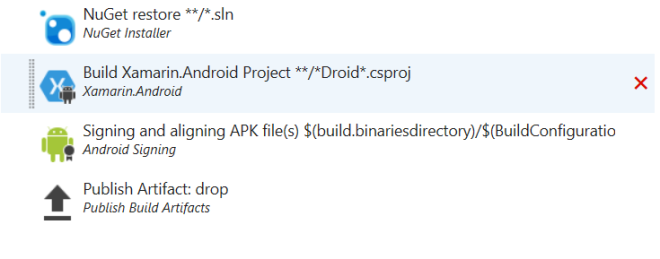
  1. In your build definition, go to your Build Xamarin.Android project step
    vstsdroid
  2. Scroll down the the JDK options section
  3. Select JDK Version 
  4. Select JDK 8 from the JDK Version dropdown
    VSTSJDK.PNG
  5. Save
  6. Run


“java.lang.OutOfMemoryError. Consider increasing the value of $(JavaMaximumHeapSize)”

The error is at least pretty explanatory. You ran out of memory in your Java Heap.

The solution is to increase your Java Heap explicitly:

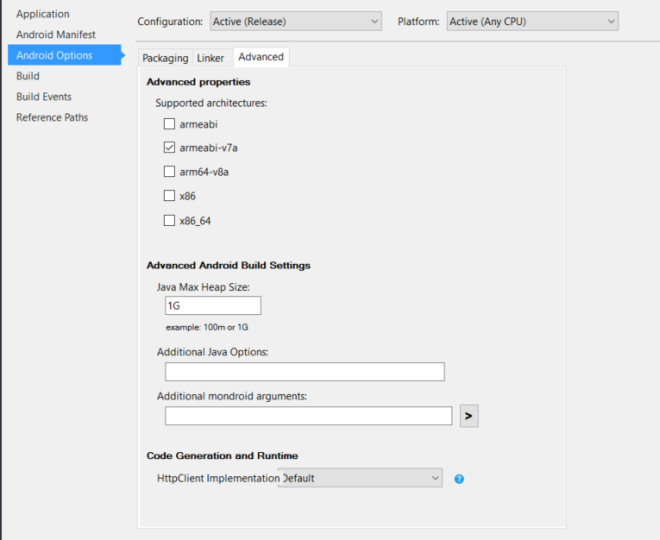
  1. In your IDE (VS or XS), go to your Android project
  2. Open the properties for your project
  3. Set your configuration to Release (or whatever configuration your VSTS build runs as)
  4. Go to the Android Options Tab
  5. Go to the Advanced tab
  6. Go down to the Advanced Android Build Settings
  7. Set the Java Max Heap Size to something larger such as “1G”

javaheap


These errors can be common and are only applicable to basic Android builds. This does not cover Continuous Deployment to services such as HockeyApp or Visual Studio Mobile Center.

Don’t forget to leave a comment if you’ve run into any different issues!